
Service guide
Lawn renovation, aeration & overseeding
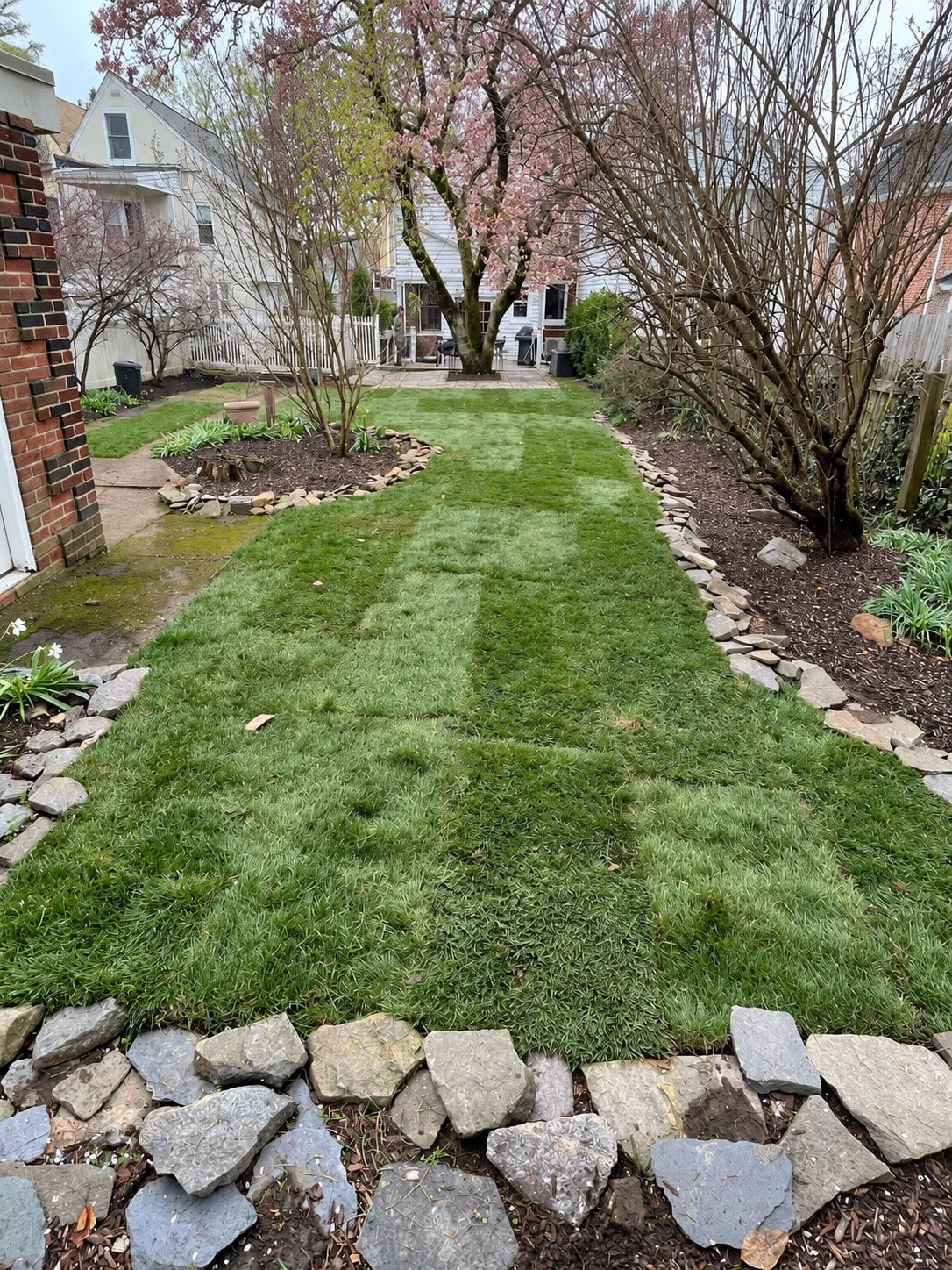
Start with why the lawn is struggling. Soil condition, sunlight, drainage and seed-to-soil contact help determine whether overseeding or a fuller renovation makes sense.
Explore belowPlan your project
What would you like to know?
For most cool-season lawns in New Castle County and nearby southeastern Pennsylvania, late summer into early fall is the strongest window. University of Delaware Extension recommends seeding from August 15 through September 30. Weather, soil moisture and grass type still guide the actual schedule.
Yes. Benitez Landscaping serves all of New Castle County, Delaware, plus nearby southeastern Pennsylvania communities including Chadds Ford, Kennett Square, and Glen Mills.
Usually, yes. Core aeration helps relieve compaction and improves seed-to-soil contact, giving new grass a better chance to establish.
Core aeration removes small plugs of soil and turf. It can improve water movement, root growth and soil airflow while reducing compaction.
Compacted lawns and areas with regular foot traffic may benefit from annual fall aeration. Less-compacted lawns may need it every two to three years. Soil condition matters more than a fixed calendar.
You can, but results may be weaker if seed cannot contact soil. Thick turf, compacted soil or thatch can prevent good germination.
Thin turf can come from compaction, shade, tree roots, poor drainage, drought stress, disease, insects, mowing habits or weak seed-to-soil contact. Identify the main issue before adding more seed.
Early germination often begins in roughly one to two weeks, depending on seed type, temperature, moisture and soil conditions. Some grasses take longer. Full establishment requires more time and consistent care.
Keep the seed zone consistently moist during germination without runoff or puddling. As roots establish, water less frequently and more deeply. Adjust for rain, temperature and your soil.
Keep foot traffic low while seedlings establish. New grass is easily damaged before its roots develop.
Wait until the new grass is tall and rooted enough to cut safely. Use sharp blades and avoid removing more than one-third of the leaf height at once. Timing depends on grass growth and site conditions.
Bare spots may result from shade, pets, traffic, drainage, insects, disease, tree roots or a damaged lawn surface. A site review helps determine whether reseeding alone is likely to work.
Overseeding adds seed to an existing lawn that is generally healthy but thin. Renovation is more involved and may include soil preparation, aeration, dethatching, weed management, grading and seeding, with a plan to correct why the lawn failed. The estimate defines the actual work.
Overseeding may be enough for a mostly healthy lawn with minor thinning. Heavy compaction, severe thinning, weeds, poor drainage or repeated failure may call for a fuller renovation.
It depends on sunlight, tree-root competition, soil moisture and grass type. Shade-tolerant grasses may help, but very shady areas may be better suited to a different landscape solution.
Dethatching can help when excessive thatch blocks water, air and seed from reaching soil. It is not automatically the right answer for every thin lawn; assess the thatch layer first.
Poor drainage, compacted soil, grading, downspout runoff and shade can contribute. Aeration can help some compacted areas, but cannot fix every drainage problem.
Aeration may improve infiltration in compacted soil, but cannot solve major drainage, grading or runoff problems by itself.
Common reasons include poor seed-to-soil contact, insufficient watering, excessive shade, compacted soil, poor timing, birds, weeds and drainage issues.
Let’s get started
Bring your outdoors
into focus.
Tell us what you have in mind.
Your first consultation and estimate are free.