
Frequently asked questions
Good questions.
Clear answers.
Practical answers for your lawn, landscape beds and seasonal property care in New Castle County and nearby Pennsylvania. Choose a topic, then open a question.
Explore belowBrowse by service
Start with your landscape.
Start with why the lawn is struggling. Soil condition, sunlight, drainage and seed-to-soil contact help determine whether overseeding or a fuller renovation makes sense.
For most cool-season lawns in New Castle County and nearby southeastern Pennsylvania, late summer into early fall is the strongest window. University of Delaware Extension recommends seeding from August 15 through September 30. Weather, soil moisture and grass type still guide the actual schedule.
Yes. Benitez Landscaping serves all of New Castle County, Delaware, plus nearby southeastern Pennsylvania communities including Chadds Ford, Kennett Square, and Glen Mills.
Usually, yes. Core aeration helps relieve compaction and improves seed-to-soil contact, giving new grass a better chance to establish.
Core aeration removes small plugs of soil and turf. It can improve water movement, root growth and soil airflow while reducing compaction.
Compacted lawns and areas with regular foot traffic may benefit from annual fall aeration. Less-compacted lawns may need it every two to three years. Soil condition matters more than a fixed calendar.
You can, but results may be weaker if seed cannot contact soil. Thick turf, compacted soil or thatch can prevent good germination.
Thin turf can come from compaction, shade, tree roots, poor drainage, drought stress, disease, insects, mowing habits or weak seed-to-soil contact. Identify the main issue before adding more seed.
Early germination often begins in roughly one to two weeks, depending on seed type, temperature, moisture and soil conditions. Some grasses take longer. Full establishment requires more time and consistent care.
Keep the seed zone consistently moist during germination without runoff or puddling. As roots establish, water less frequently and more deeply. Adjust for rain, temperature and your soil.
Keep foot traffic low while seedlings establish. New grass is easily damaged before its roots develop.
Wait until the new grass is tall and rooted enough to cut safely. Use sharp blades and avoid removing more than one-third of the leaf height at once. Timing depends on grass growth and site conditions.
Bare spots may result from shade, pets, traffic, drainage, insects, disease, tree roots or a damaged lawn surface. A site review helps determine whether reseeding alone is likely to work.
Overseeding adds seed to an existing lawn that is generally healthy but thin. Renovation is more involved and may include soil preparation, aeration, dethatching, weed management, grading and seeding, with a plan to correct why the lawn failed. The estimate defines the actual work.
Overseeding may be enough for a mostly healthy lawn with minor thinning. Heavy compaction, severe thinning, weeds, poor drainage or repeated failure may call for a fuller renovation.
It depends on sunlight, tree-root competition, soil moisture and grass type. Shade-tolerant grasses may help, but very shady areas may be better suited to a different landscape solution.
Dethatching can help when excessive thatch blocks water, air and seed from reaching soil. It is not automatically the right answer for every thin lawn; assess the thatch layer first.
Poor drainage, compacted soil, grading, downspout runoff and shade can contribute. Aeration can help some compacted areas, but cannot fix every drainage problem.
Aeration may improve infiltration in compacted soil, but cannot solve major drainage, grading or runoff problems by itself.
Common reasons include poor seed-to-soil contact, insufficient watering, excessive shade, compacted soil, poor timing, birds, weeds and drainage issues.
A mowing schedule should follow how your lawn grows. Consistent cutting, sensible mowing height and attention to seasonal stress support a better-looking lawn.
Frequency depends on growth rate, weather, grass type and the desired appearance. Weekly service is common during active growth, but the lawn’s condition should guide the schedule.
Dull mower blades, mowing too low, heat stress, disease and underlying soil issues can affect how turf looks after mowing.
Cool-season lawns generally benefit from a higher summer mowing height to reduce stress and moisture loss. The best setting depends on grass type and lawn condition.
Cutting too low can stress turf, expose soil to heat, increase weed pressure and weaken root development.
Removing too much leaf blade in one visit can stress grass. Regular mowing helps avoid extreme cuts; frequency alone is not usually the problem.
Benitez Landscaping serves recurring lawn-care clients across New Castle County and nearby southeastern Pennsylvania, including Chadds Ford, Kennett Square and Glen Mills.
The approach depends on weed type, lawn density, season, turf health and your lawn goal. Proper mowing, soil care and overseeding can help improve turf density. We can discuss the appropriate scope after reviewing the property.
Clean edges, prepared beds and an appropriate mulch layer bring definition back to the landscape. We review existing material, plants, access and bed size before recommending the scope.
Pricing depends on bed size, mulch type, intended depth, weed removal, edging, access, delivery, disposal and existing bed condition. A tailored estimate is the best way to price the work accurately.
The amount depends on your beds’ total square footage and desired depth. Fresh installations and annual refreshes may require different quantities. Measure the existing layer before adding more.
Scope can include bed cleanup, weeding, edge definition, mulch delivery, installation and approved debris removal. Your estimate will define exactly what is included.
Not always. A refresh may be enough when existing mulch is in good condition. If it is too deep, compacted, weedy, contaminated or spilling into turf, removal or bed reconditioning may be better.
Yes. Excessive mulch can reduce oxygen around roots and keep trunks and stems too wet. Keep mulch away from trunks and stems and leave the tree’s root flare visible.
Inspect beds annually and refresh when needed. Full replacement is only necessary when the existing layer is no longer working well.
The best choice depends on the appearance you want, your plants, maintenance preferences and budget. We can help compare options for your property.
Yes. Bed cleanup may include debris removal, weeding, edge redefinition, appropriate trimming, mulch preparation and a plan for ongoing maintenance.
Weeds, spreading mulch, leaf buildup, weak edging, overgrown plants and seasonal debris can reduce bed definition. Cleanup and a maintenance plan can restore the look.
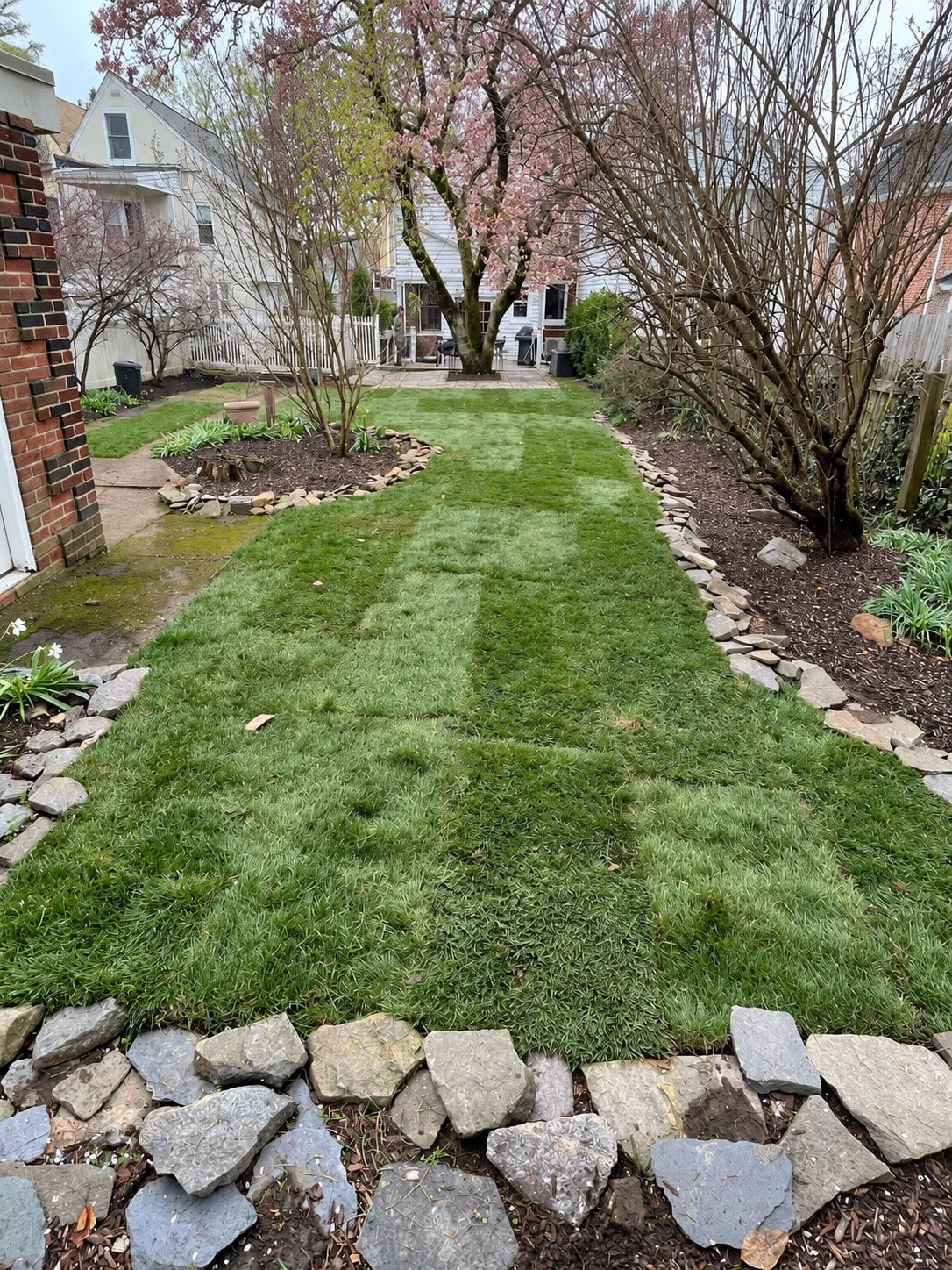
Benitez Landscaping can evaluate sod installation throughout New Castle County and nearby Pennsylvania service areas. Successful sod work depends on soil preparation, grading, drainage, timing and follow-up watering.
Sod gives an immediate green appearance, while seed can be more flexible and cost-effective for some lawns. The choice depends on timing, lawn condition, budget, erosion concerns and your ability to water properly.
Prepare for spring growth or clear the buildup of fall. Cleanup visits can focus on lawns, beds, patios and the places where leaves and debris collect.
Spring cleanups can include leaf and debris removal, bed cleanup, edging, weeding, selective trimming, mulch preparation and hauling away approved debris. The estimate confirms your scope.
Schedule when winter debris is visible and the property is accessible, ideally before spring growth makes beds harder to clean.
Yes. Benitez Landscaping provides fall cleanup and leaf removal throughout New Castle County and nearby southeastern Pennsylvania service areas.
A thick leaf layer can block sunlight and trap moisture against turf. Removing or properly managing leaves helps protect the lawn heading into winter.
Yes. The scope can be tailored to lawns, landscape beds, fence lines, patios, shrubs and other areas where leaves collect.
Many properties need more than one visit as leaves continue falling. Timing depends on tree coverage, property size, weather and whether you want a final end-of-season cleanup.
Serving all of New Castle County, Delaware, and nearby southeastern Pennsylvania, including Chadds Ford, Kennett Square, Glen Mills and surrounding Chester County communities. Share your address to confirm availability.
We serve all of New Castle County, Delaware, and nearby southeastern Pennsylvania communities including Chadds Ford, Kennett Square, Glen Mills and surrounding Chester County areas.
Yes. These communities are within New Castle County, Delaware. Contact us with your address and requested service to confirm scheduling availability.
Use our estimate form or call (302) 898-4232. Share your address, service, approximate dimensions and preferred timing. You can email photos or video to BenitezLandscapes@gmail.com to help us determine whether a site visit is needed.
For larger, irregular or condition-dependent work, an on-site visit is usually best for an accurate scope and price. Photos may be enough for some work.
Send clear photos, a short video if helpful, your address, service, approximate measurements, access details and any deadlines or priorities. Email attachments to BenitezLandscapes@gmail.com.
Pricing depends on labor, materials, equipment, disposal, travel, access, property condition and the exact scope. A written estimate should make the included work clear.
Yes. Describe the result you want and share property photos. We can help identify whether you need cleanup, mowing, mulch, lawn renovation, sod, trimming or another improvement.
We can discuss one-time improvement projects and recurring maintenance based on service type, location and scheduling availability.
Let’s get started
Bring your outdoors
into focus.
Tell us what you have in mind.
Your first consultation and estimate are free.